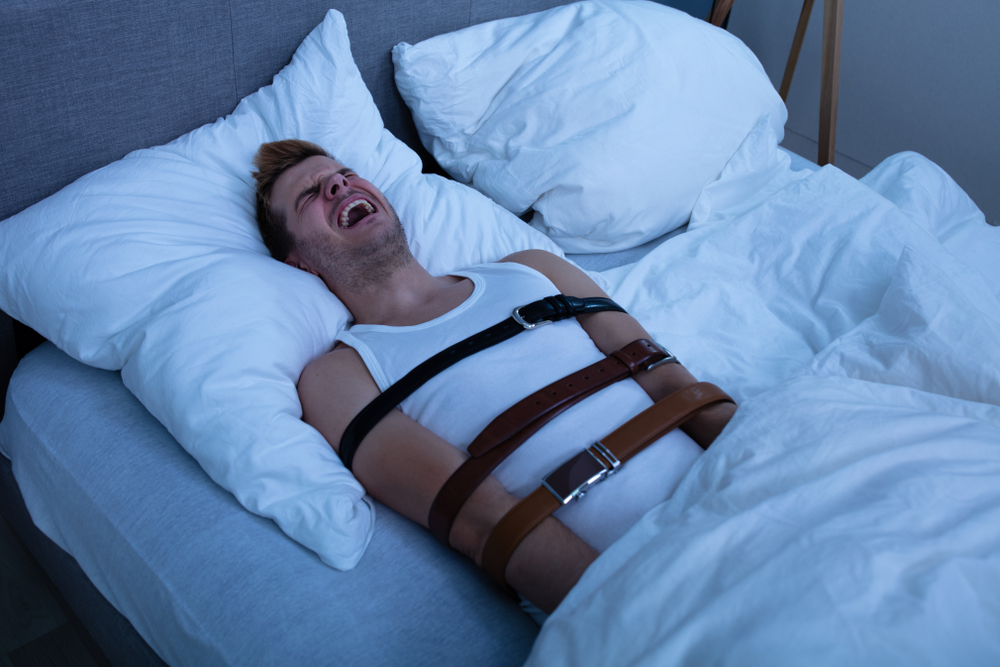
sensation of being outside your body, vivid hallucinations, and intense fear or panic. Some episodes last only moments, while others can stretch up to 20 minutes.
So what causes it?
During REM sleep—the stage when most dreaming occurs—your brain temporarily “shuts off” your muscles. This prevents you from physically acting out your dreams. Sleep paralysis happens when your mind wakes up before your body does, leaving you conscious but unable to move.
- High stress
- Poor or irregular sleep
- Anxiety
- Exhaustion
- Disrupted sleep schedules
Several studies have shown that people who are exhausted, stressed, or dealing with sleep deprivation are more likely to experience sleep paralysis, according to sleep expert and CBT psychologist Charlott Ulfsparre.
Despite the fear it brings, sleep paralysis is not dangerous, and it’s not considered a disease. It’s a natural phenomenon that humans have been trying to understand for centuries. Ancient Persian medical texts described it in the 900s, and one of the first documented cases was recorded by a Dutch physician in 1664.
