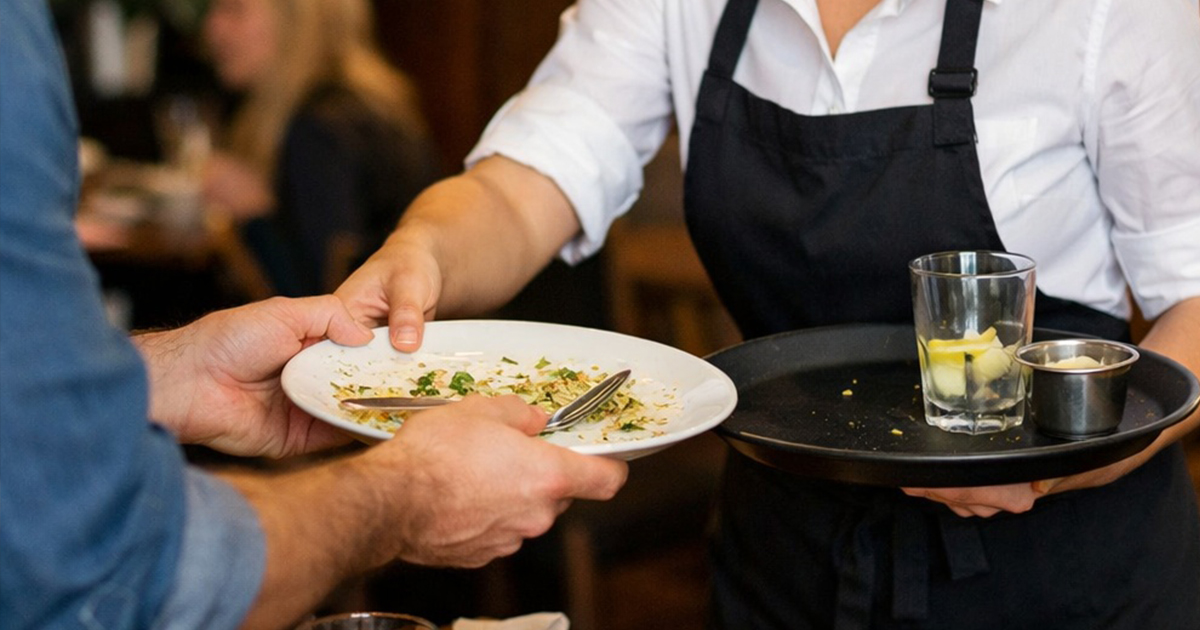
Many of the people who reach for plates or straighten napkins before the server arrives are former restaurant workers, individuals who’ve endured the ache of long shifts and mastered the delicate art of juggling requests while hiding exhaustion behind professionalism.
For others, the gesture comes from a different place – a natural awareness, a heightened sensitivity to their environment that allows them to notice the unspoken signs of strain. Without calculation or fanfare, these people respond with simple, meaningful action – offering help not for recognition, but because they understand what it means to feel overwhelmed.
“It to me shows you have class, you’re not above getting your hands dirty to help someone,” a second user writes.
Prosocial behavior
Helping a waiter clear plates or pass along condiments might seem like a simple gesture, but it reflects something much deeper rooted in human psychology. These moments, often unnoticed by others at the table, are examples of what psychologists call prosocial behavior – actions that benefit another person without any expectation of reward.
People who engage in these small, unrequested acts tend to pick up on others’ nonverbal cues. Without needing to be asked, they step into the rhythm of the room and contribute in a way that subtly shifts the weight off someone else’s shoulders.
In psychological terms, these actions are considered low-cost, high-impact contributions to social harmony. They may not change the course of a day, but for the person on the receiving end, it can mean the difference between burnout and a moment of gratitude.
And according to research, people who engage in acts of kindness often experience better mental health and higher overall life satisfaction. This connection highlights how helping others can meaningfully contribute to emotional wellness and a stronger sense of purpose.
