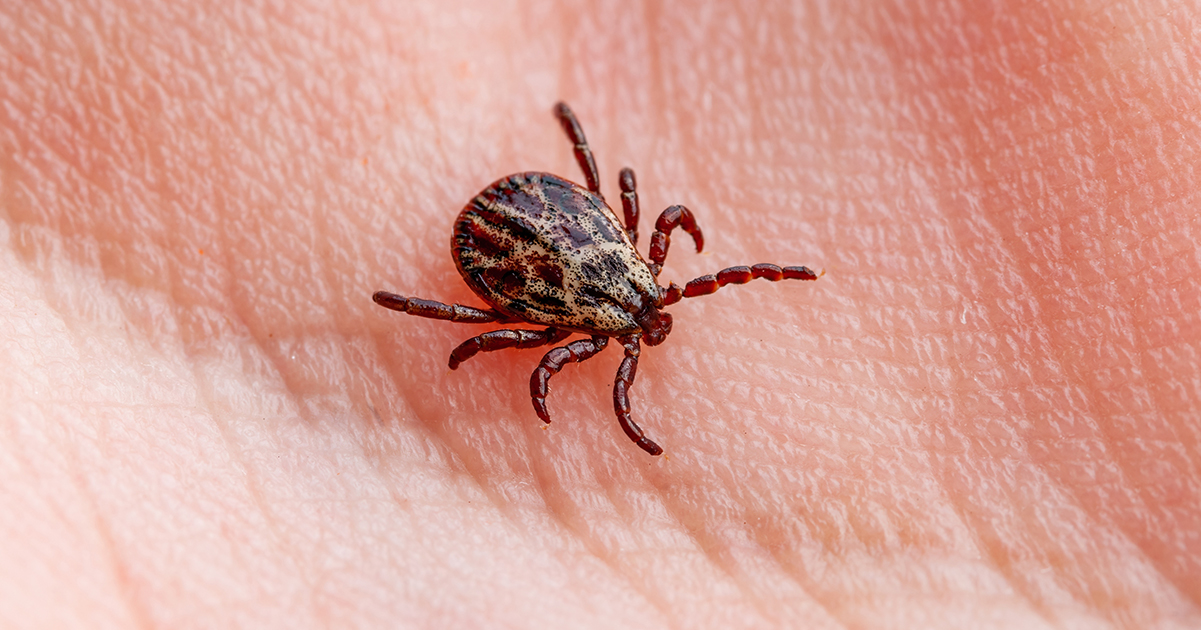
A fairly obvious way of limiting your chances is by doing all the right things where ticks are concerned. You can’t guard one-hundred percent against them, but you can take steps to make sure you limit the possibility of being bitten, which in turn limits the possibility of you contracting one of the aforementioned diseases.

The first step is to remove it carefully and quickly. Do not just try and pull it off with finger and thumb, as this may cause the tick’s body to detach from its head, leaving the latter part in your skin. Rather, use fine-tipped forceps or tweezers, grasp the tick as close to your skin as possible, and gently pull it free in a single continuous motion.
Take care not to squeeze or twist the tick, as it may then regurgitate its contents into the wound.
Here we come to the next part: disposing of the tick properly. It might seem as obvious as simply throwing it in the trash, but there are actually steps you should be taking to ensure that the particular tick you’ve found will never feed on blood – human or otherwise – again.
For best results, place the tick in a sealed bag or container to prevent future contact with humans and animals. Alternatively, you can wrap it in tissue paper and flush it down the toilet.

Bear in mind that some veterinarians may recommend bringing the tick to the office for identification and further assessment if you’ve found it on your pet. So it might be an idea to keep it in a sealed bag or container after all.
